Translating Content for Readability: Quality Checks Beyond Word-for-Word

- translation
- localization
- readability
- content
Why translated marketing and support copy needs its own readability pass, how expansion breaks layouts, and a QA checklist for MT plus human review.
How translation changes layout and rhythm
Expansion, compression, and UI
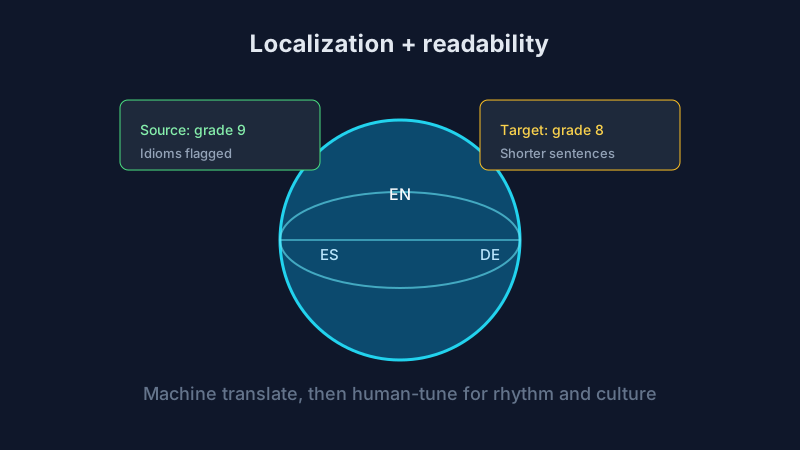
Translation changes length — German and Finnish often expand; Asian languages may compress ideographically but need different line-breaking rules. UI strings that fit in English may overflow buttons after translation—test in real components, not only docs.
Readability is local
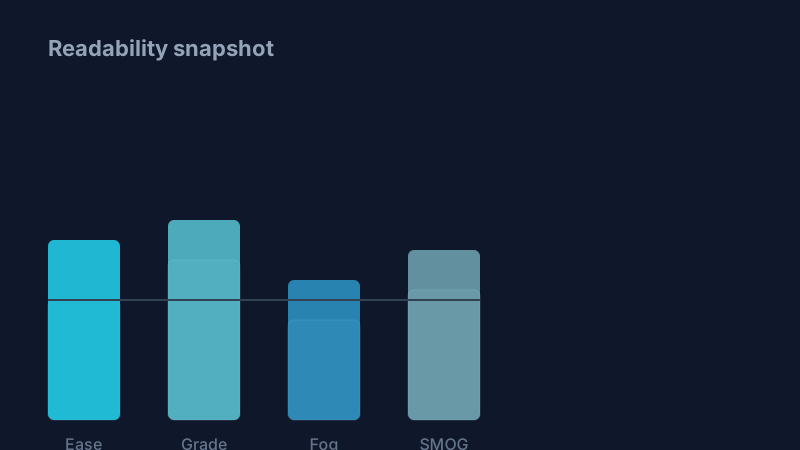
A “good” grade level in English doesn’t transfer metric-for-metric. Still, average sentence length, passive voice, and jargon density are useful within each locale after a fluent edit.
Quality workflow
Glossary through native review
(1) Glossary for product terms. (2) MT draft with human post-edit. (3) Back-translation spot check for high-risk claims. (4) Run readability/NLP stats per language where available. (5) Native reviewer signs off on tone.
SynthQuery tip
Draft in one language, align structure, then localize. Use translator for first pass, then edit for rhythm. Compare against your English SynthRead baselines for relative complexity, not identical scores.
Claims, compliance, and locale law
Regulated claims (health, finance, pricing) need locale-specific review—MT plus post-edit is not enough when a mistranslation creates liability. Keep glossary ownership by market and log who signed off on high-risk strings.
Related reading
Readability and SEO and Shopify product descriptions with AI.

Itamar Haim
SEO & GEO Lead, SynthQuery
Founder of SynthQuery and SEO/GEO lead. He helps teams ship content that reads well to humans and holds up under AI-assisted search and detection workflows.
He has led organic growth and content strategy engagements with companies including Elementor, Yotpo, and Imagen AI, combining technical SEO with editorial quality.
He writes SynthQuery's public guides on E-E-A-T, AI detection limits, and readability so editorial teams can align practice with how search and generative systems evaluate content.
Related Posts
How to Make AI-Generated Content Sound Human (Without a Humanizer Tool)
Manual editing techniques to make AI drafts feel natural: voice, rhythm, specifics, and a repeatable workflow—plus prompt templates and a checklist so you can pass the human test before you publish.
Jargon vs. Precision in B2B Writing: When to Keep Technical Terms
A framework for deciding which specialized terms earn their place, how to introduce them without losing skimmers, and how readability scores should differ by funnel stage.
Academic Integrity in the Age of AI: A Student's Guide
A supportive, practical guide for students: what universities usually allow, how to read your school’s AI policy, ethical use of tools for research and editing, what happens in misconduct cases, how to appeal a mistaken AI flag, disclosure language, and building real writing skills alongside AI.
Get the best of SynthQuery
Tips on readability, AI detection, and content strategy. No spam.