Internal Linking for Topical Authority: Hub, Spoke, and Anchor Text Rules

- internal links
- SEO
- site architecture
- content hubs
How to structure hubs and spokes, vary anchors without stuffing, fix orphan pages, and measure internal link health as you publish more guides.
Hub-and-spoke structure
Pillars, spokes, and cross-links
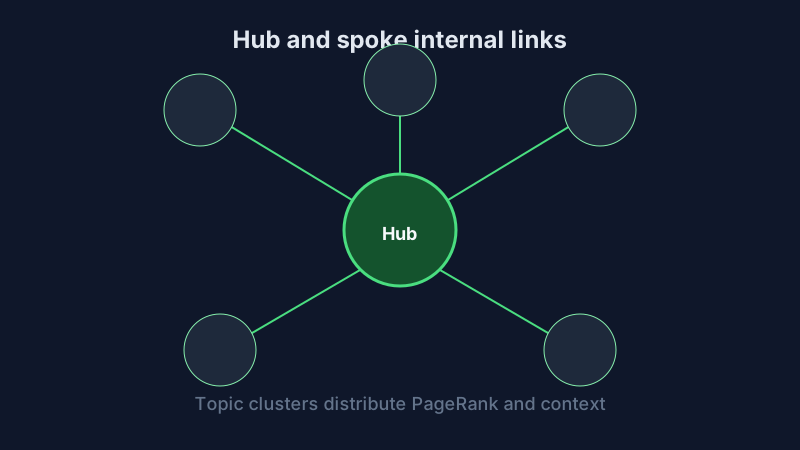
A pillar page covers the head term broadly; spokes answer specific long-tail questions and link up to the pillar. Spokes cross-link where concepts overlap. This mirrors how readers learn and how crawlers cluster topics.
Depth vs. crawl bloat
Not every post needs dozens of links—prioritize paths that match real reader journeys and your revenue pages.
Pillar refresh and new spokes
When you add spokes, update the pillar with a short “related guides” block so crawlers and readers see the cluster as one living map—not a one-time publication burst.
Anchor text and placement
Descriptive, varied phrases
Prefer descriptive phrases that tell users what they’ll get (Flesch–Kincaid formulas), not endless click here. Avoid exact-match spam; variety reads naturally and reduces over-optimization risk.
Contextual body links win
Links inside body copy carry more topical signal than footer boilerplate. Introduce links where they solve the next question a reader would ask.
Nav and footer as supplements
Site-wide nav and footers help discovery but shouldn’t replace in-article bridges—use them for persistent categories, not every new post.
Orphans, depth, and operations
Crawl depth and zero-inlink pages
New posts should sit ≤3 clicks from home or a major hub. Audit for pages with zero inlinks—they’re harder to rank and discover.
CMS checklist and hub map
When publishing, require two internal links minimum in the CMS checklist. Keep a living map of hubs in your docs wiki.
Quarterly audits for drift
Run a light orphan report each quarter: pages with zero inlinks or stale anchor text to deprecated products hurt both UX and crawl efficiency.
Related reading

Itamar Haim
SEO & GEO Lead, SynthQuery
Founder of SynthQuery and SEO/GEO lead. He helps teams ship content that reads well to humans and holds up under AI-assisted search and detection workflows.
He has led organic growth and content strategy engagements with companies including Elementor, Yotpo, and Imagen AI, combining technical SEO with editorial quality.
He writes SynthQuery's public guides on E-E-A-T, AI detection limits, and readability so editorial teams can align practice with how search and generative systems evaluate content.
Related Posts
The Legal Status of AI-Generated Content: Copyright, Disclosure, and Detection
A practical overview of U.S. and international rules on AI-generated works: Copyright Office practice, EU labeling, FTC disclosure expectations, state AI laws, academic and publishing norms, Google’s guidance, and where detection tools fit in compliance workflows.
Content Briefs That Work: How to Plan SEO Content in 2026
A field-tested SEO content brief template, research workflow, writer handoff checklist, and ways to measure whether your briefs actually produce rankings.
What Is E-E-A-T? Google's Content Quality Framework Explained (2026)
A full guide to Experience, Expertise, Authoritativeness, and Trustworthiness—how Google talks about content quality, how raters use E-E-A-T, and how to implement it for search and AI-cited answers.
Get the best of SynthQuery
Tips on readability, AI detection, and content strategy. No spam.