Plagiarism Checkers: A Practical Guide for Students, Freelancers, and Teams

- plagiarism
- originality
- academic writing
- workflow
How similarity detection works, what “plagiarism” means in tools vs. policy, citation edge cases, and a workflow that protects both originality and collaboration.
What checkers actually detect
Textual overlap, not intent
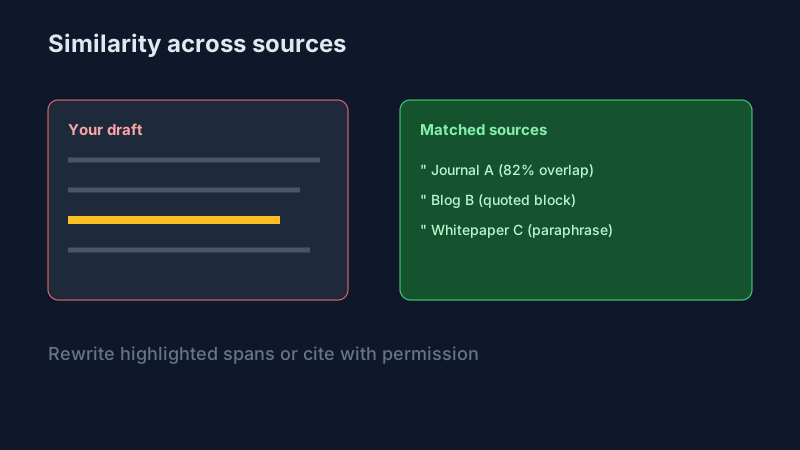
Most tools flag textual overlap with web sources, databases, or prior submissions. They don’t judge intent; a high match can be properly quoted material, boilerplate, or common phrases. Treat alerts as triage, not automatic guilt.
Why context changes the read
The same percentage can mean plagiarism in one course and acceptable citation in another—always interpret against your rubric or contract.
Corpus and index limits
Checkers only compare against their corpora—unpublished sources, private wikis, or paywalled databases may not appear even when overlap is real.
Policy vs. product
Align tools with rules
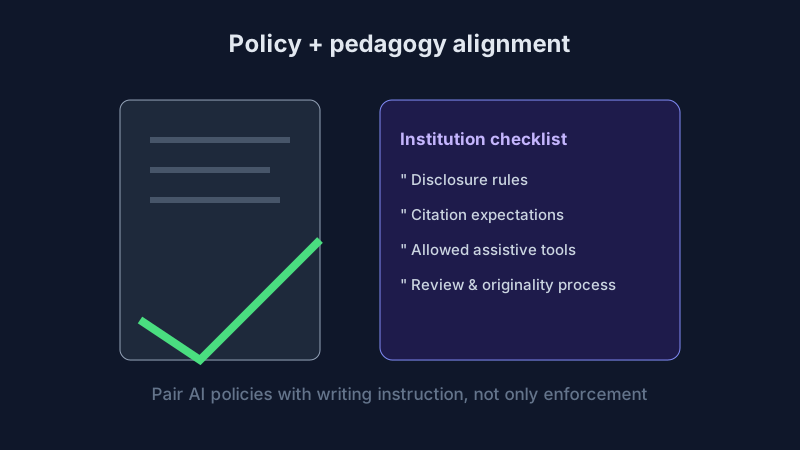
Your school or client contract defines what counts as misconduct. Tools approximate similarity; human review decides whether overlap is allowed, cited, or collaborative. Keep version history and source notes when co-authoring.
When two tools disagree
If percentages differ between checkers, focus on which sources matched and whether your policy cares about those overlaps—not on chasing zero at all costs.
Keep policy next to the tool
Paste a short summary of your institution’s rules beside the checker link in your wiki—writers interpret percentages against policy, not vendor defaults.
A practical workflow
From draft to final report
(1) Finish a substantive draft. (2) Run your institution’s or client’s approved checker or SynthQuery’s plagiarism tool. (3) Open each match: quote + cite, paraphrase with new structure, or remove if redundant. (4) Re-run until only acceptable matches remain. (5) For teams, store the final report with the asset.
Collaboration and attribution
When multiple authors contribute, log who added quoted blocks and keep revision history so reviewers can separate intentional citation from accidental overlap.
When to re-run after edits
Re-run after substantive rewrites—new paragraphs can introduce fresh matches even when the narrative feels unchanged.
Edge cases
Templates, translation, and AI
Templates, legal disclaimers, and API docs often match widely. Translations and AI-assisted drafts need explicit disclosure per your rules. When in doubt, ask the editor before publication.
Boilerplate and stock phrases
Short common phrases may flag without misconduct—compare against your rubric and whether the match carries substantive borrowed ideas, not just wording.
Cross-language and transliteration
Translated or romanized sources can produce odd overlap scores; escalate to a reader fluent in both languages when stakes are high.
Related reading

Itamar Haim
SEO & GEO Lead, SynthQuery
Founder of SynthQuery and SEO/GEO lead. He helps teams ship content that reads well to humans and holds up under AI-assisted search and detection workflows.
He has led organic growth and content strategy engagements with companies including Elementor, Yotpo, and Imagen AI, combining technical SEO with editorial quality.
He writes SynthQuery's public guides on E-E-A-T, AI detection limits, and readability so editorial teams can align practice with how search and generative systems evaluate content.
Related Posts
How to Check for Plagiarism: A Complete Guide for Writers and Editors
Manual checks, free and paid plagiarism tools, how to read similarity reports, types of plagiarism with examples, and an editorial workflow—plus how AI writing tools change originality work.
Plagiarism Detection vs AI Detection: What's the Difference?
Plagiarism checkers and AI detectors solve different problems. Learn how each technology works, what it cannot see, where they overlap, and when to run both—plus a decision guide for classrooms, newsrooms, and content teams.
Self-Plagiarism: What It Is, Why It Matters, and How to Avoid It
Self-plagiarism means reusing your own published or submitted work without clear disclosure—often misunderstood, sometimes a policy violation, and separate from copyright. Here is a practical guide to contexts, checkers, rights, and ethical repurposing.
Get the best of SynthQuery
Tips on readability, AI detection, and content strategy. No spam.