E-E-A-T Content Checklist for YMYL and Competitive Topics (2026)

- E-E-A-T
- SEO
- trust
- content quality
Experience, expertise, authoritativeness, and trust—turned into a publish checklist for pages that compete on credibility, not just keywords.
For the full framework (history, pillars, GEO, and AI), start with What is E-E-A-T? Google’s content quality framework—then use the checklist below at publish time.
Experience and expertise signals
Show first-hand detail
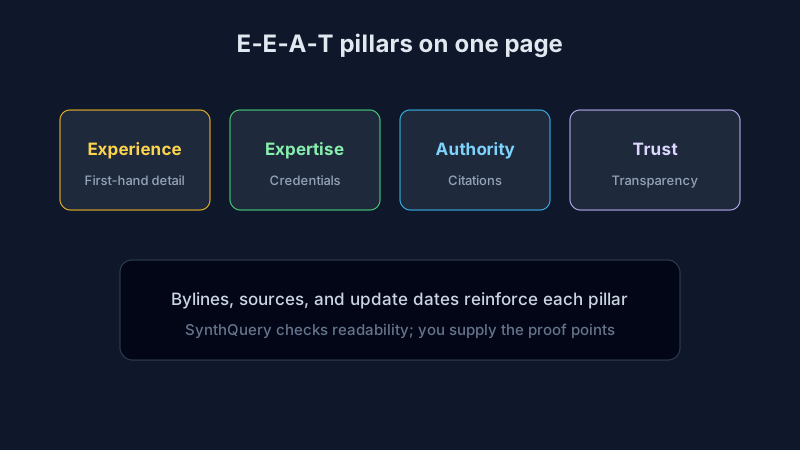
Show first-hand detail: what you tried, what broke, timelines, screenshots. Generic advice without specifics struggles in YMYL and saturated SERPs.
Author bios and methodology
Author bios with relevant credentials, methodology sections for data posts, and citations to primary sources. Link out to standards bodies and peer-reviewed work when making medical or financial claims—always follow your compliance team.
Primary sources over opinion chains
Prefer primary studies and official docs over blog summaries of summaries—raters reward verifiable evidence.
Authoritativeness and trust
Earn mentions and map depth
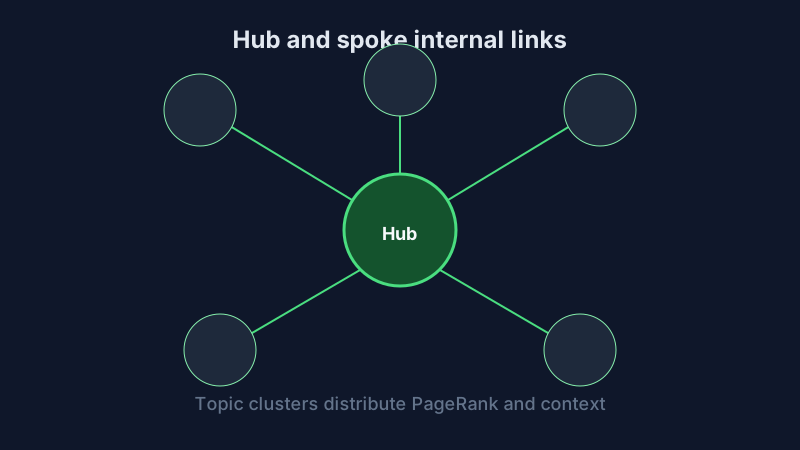
Earn mentions and links from recognized sites in your niche. Internal topic clusters (see internal linking) help search engines map your depth.
Contact, policies, and corrections
Clear contact, about, refund/privacy pages; accurate dates; visible corrections policy. Avoid anonymous reviews and undisclosed affiliate relationships.
Brand and third-party validation
Earned mentions from recognized publications and consistent org identity across the web support authority—beyond what any single page claims about itself.
Readability as a trust signal
Clarity on money and health topics
Confusing prose feels risky for money and health topics. Run SynthRead and fix long sentences and passive stacks that obscure who is responsible for recommendations.
Headings and scannability
Layer H2/H3 structure so busy readers can verify claims and find disclaimers fast—especially next to forms and CTAs.
Plain language next to legal and financial risk
When topics are sensitive, confusing prose reads as risky—pair clear sentences with visible expert review where required.
Related reading

Itamar Haim
SEO & GEO Lead, SynthQuery
Founder of SynthQuery and SEO/GEO lead. He helps teams ship content that reads well to humans and holds up under AI-assisted search and detection workflows.
He has led organic growth and content strategy engagements with companies including Elementor, Yotpo, and Imagen AI, combining technical SEO with editorial quality.
He writes SynthQuery's public guides on E-E-A-T, AI detection limits, and readability so editorial teams can align practice with how search and generative systems evaluate content.
Related Posts
What Is E-E-A-T? Google's Content Quality Framework Explained (2026)
A full guide to Experience, Expertise, Authoritativeness, and Trustworthiness—how Google talks about content quality, how raters use E-E-A-T, and how to implement it for search and AI-cited answers.
Content Briefs That Work: How to Plan SEO Content in 2026
A field-tested SEO content brief template, research workflow, writer handoff checklist, and ways to measure whether your briefs actually produce rankings.
The Legal Status of AI-Generated Content: Copyright, Disclosure, and Detection
A practical overview of U.S. and international rules on AI-generated works: Copyright Office practice, EU labeling, FTC disclosure expectations, state AI laws, academic and publishing norms, Google’s guidance, and where detection tools fit in compliance workflows.
Get the best of SynthQuery
Tips on readability, AI detection, and content strategy. No spam.